Top Interactive Science Apps That Encourage Hands-On Learning at Home
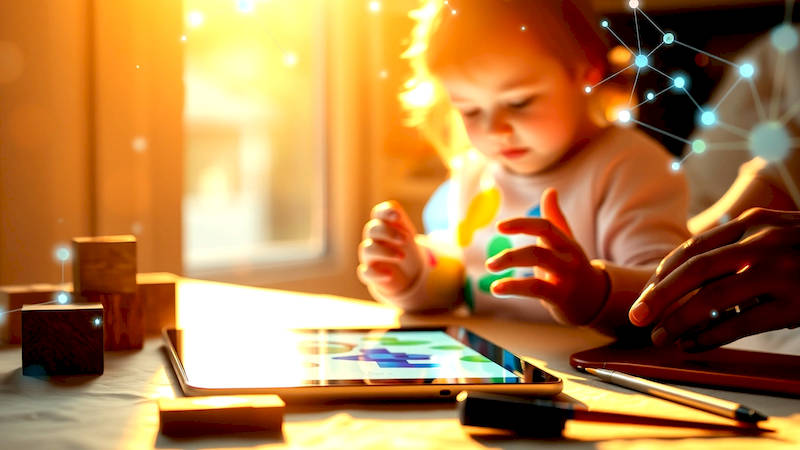
The 21st century presents children with a world brimming with technology, and integrating that technology into their learning journey is no longer a futuristic idea—it's a necessity. While concerns about screen time are valid, thoughtfully chosen educational apps can transcend passive entertainment, offering immersive and interactive experiences that foster a genuine love for science. Science, at its core, is about exploration, experimentation, and asking ‘what if?’ Traditional classroom settings, while vital, often have limitations in providing individualized, hands-on learning at scale. Interactive science apps bridge this gap, delivering engaging content directly to children, fostering critical thinking, and building a strong foundation for STEM (Science, Technology, Engineering, and Mathematics) fields.
Increasingly, parents are seeking ways to supplement their children’s education outside of school, and the demand for quality STEM learning resources has skyrocketed. A recent study by the National Science Foundation reveals that nearly 60% of parents believe STEM education is crucial for their child’s future success. This demand has fueled the development of a vast array of science apps, but navigating this landscape can be overwhelming. This article aims to provide a curated guide to the top interactive science apps, focusing on those that truly encourage hands-on learning, providing children with opportunities to investigate, experiment, and discover the wonders of the scientific world from the comfort of their homes.
- Building a Foundation with Interactive Simulations: Tynker & Arloon
- Exploring the Microscopic World: MEL Science & Nanome
- Environmental Science & Data Collection: iNaturalist & Globe Observer
- Physics & Engineering in Action: The Physics Classroom & Bridge Constructor Portal
- Integrating Apps into Home Learning: A Holistic Approach
Building a Foundation with Interactive Simulations: Tynker & Arloon
Tynker, while often recognized for its coding curriculum, possesses a stellar selection of science-based activities designed to introduce fundamental concepts in a playful manner. Rather than simply reading about physics or chemistry, children use visual block coding to build and manipulate simulated environments. They can design ecosystems, explore gravity and motion through game creation, and even build simple electric circuits. This approach moves beyond rote memorization, asking children to actively apply scientific principles to solve problems. The app fosters computational thinking skills, which are increasingly important across all disciplines, tying science to a valuable skill set.
The true power of Tynker lies in its modular approach. Parents can select specific science-focused modules aligning with their child’s current studies or interests. For example, if a child is learning about the solar system in school, Tynker offers projects where they can code their own planetarium or design a space rover. This direct connection to real-world applications drastically enhances engagement. Furthermore, Tynker isn’t a one-time experience; with regular new content updates, there's always something fresh to explore, keeping the learning process dynamic.
Arloon offers a dramatically different, yet equally effective, approach. This app emphasizes immersive 3D models and virtual dissections. While ethical concerns rightly exist around animal dissection in schools, Arloon provides a safe, ethical, and incredibly detailed alternative. Children can explore the human body, animal anatomy, and even complex geological structures without causing harm. The app’s detailed models and interactive features allow for layered exploration, encouraging a deeper understanding of complex systems.
Exploring the Microscopic World: MEL Science & Nanome
Many scientific principles are invisible to the naked eye, making them difficult for children to grasp. MEL Science tackles this challenge head-on by combining a subscription-based virtual reality (VR) and augmented reality (AR) experience with physical chemistry sets delivered to your door. Children perform real-world chemistry experiments, guided by the app, and then use the VR component to visualize the chemical reactions unfolding at the molecular level. This connection between the tangible and the abstract is incredibly powerful, solidifying their understanding of chemical processes.
The brilliance of MEL Science isn’t just in the technology; it’s in the pedagogical approach. Each experiment is designed to be safe and engaging for children, with clear instructions and explanations. The accompanying VR element turns invisible processes into spectacular visual displays, making learning genuinely unforgettable. Consider a simple acid-base reaction: instead of merely observing a color change, children can witness the collision of molecules and the formation of new bonds in a dynamic 3D environment.
Nanome moves into a different realm of the microscopic - the nanoscale. This app, geared towards slightly older children and adolescents, allows exploration of molecular structures in stunning detail. Initially designed for researchers, Nanome's accessibility has made it a valuable tool for advanced STEM learning. Users can manipulate and visualize proteins, DNA, and other molecules, gaining insight into their structure and function. The app fosters spatial reasoning skills and provides a concrete understanding of complex biochemical concepts.
Environmental Science & Data Collection: iNaturalist & Globe Observer
Learning about science shouldn’t be confined to labs or virtual simulations; it should extend to the world around us. iNaturalist is a citizen science project and app that encourages users to document and identify plants and animals they encounter in their local environment. Children can photograph organisms, upload their observations to the app, and receive assistance from a community of experts in identifying them. This fosters a sense of responsibility towards the environment and encourages careful observation skills. The app isn’t just about identification; it also contributes to real scientific research, allowing children to become active participants in data collection efforts.
iNaturalist's impact is significant: millions of observations have been made globally, creating a vast database of biodiversity data that scientists use to track species distribution, monitor environmental changes, and inform conservation efforts. Children who participate in iNaturalist are not just learning about science; they are doing science. The sense of accomplishment derived from contributing to actual scientific research is immensely rewarding and can ignite a lifelong passion for environmental stewardship.
Globe Observer, developed by NASA, takes a similar approach but focuses on earth science. It encourages participants to make observations about clouds, land cover, mosquito habitats, and trees. These observations contribute to NASA’s research, helping scientists validate satellite data and improve our understanding of the Earth’s systems. The app provides simple, step-by-step instructions, making it accessible to children of all ages. It’s important to note that Globe Observer explicitly connects children's local observations to larger global issues, such as climate change.
Physics & Engineering in Action: The Physics Classroom & Bridge Constructor Portal
While some apps focus on biological or chemical sciences, it’s essential to provide resources that explore the fundamentals of physics and engineering. The Physics Classroom app is a fantastic supplement to traditional physics lessons, offering clear explanations, interactive simulations, and practice problems. It covers a wide range of topics, from motion and forces to energy and waves. The app’s well-structured content makes complex concepts more accessible and easily digestible for learners. Crucially, this app isn't simply a digital textbook, it provides targeted practice exercises that allow children to immediately apply what they've learned.
The app’s key strength lies in its simplicity and focus on fundamental principles; it avoids overwhelming users with overly complex mathematical formulations. Instead, it prioritizes conceptual understanding and encourages children to develop an intuitive grasp of physical phenomena. It serves as an excellent resource for reinforcing concepts learned in school or for self-directed learning.
For a more playful approach to engineering, Bridge Constructor Portal is an excellent choice. Inspired by the popular video game Portal, this app challenges players to design and build bridges that can withstand various loads and obstacles. It introduces fundamental engineering principles, such as tension, compression, and structural integrity, in an engaging and addictive format. It isn't simply about completing levels, but about understanding why certain designs work and others fail. This iterative problem-solving process is crucial for developing engineering skills.
Integrating Apps into Home Learning: A Holistic Approach
Simply downloading a few apps isn't enough to create a meaningful learning experience. Successful integration requires a holistic approach. Firstly, it is crucial to consider your child’s age and interests. Start with apps that align with their current curriculum or passions. Don’t try to cram too much information at once; focus on one or two apps at a time and allow your child to explore them at their own pace.
Secondly, foster active participation. Encourage your child to talk about what they are learning, to ask questions, and to experiment with different approaches. Turn app-based learning into a shared activity, where you can learn alongside your child. Finally, remember that apps are tools, not replacements for hands-on exploration. Complement app-based learning with real-world experiments. If your child is learning about plants through an app, take them to a garden or park and have them observe plants in their natural environment. The combination of virtual and real-world experiences will create a truly enriching learning journey.
In conclusion, interactive science apps offer a powerful and engaging way to spark curiosity and foster a love of learning in children. By leveraging the power of technology, these apps can make complex scientific concepts accessible, encourage hands-on exploration, and contribute to the development of critical thinking skills. When thoughtfully integrated into a holistic learning approach, these apps can empower children to become confident, capable, and passionate scientists of tomorrow. Remember to prioritize quality over quantity, choose apps that align with your child’s interests and learning style, and most importantly, make learning fun!
Deja una respuesta