Encouraging Problem-Solving Skills Through Engineering Challenges for Kids
The 21st century demands a new skillset. While traditional education rightly focuses on foundational knowledge, increasingly employers – and the complexity of modern life – prioritize problem-solving, critical thinking, and creativity. These aren’t innate talents, but skills that can be cultivated, and perhaps nowhere is this cultivation more effective than through engaging kids in engineering challenges. Engineering isn't just about bridges and buildings; it’s a process of identifying needs, brainstorming solutions, designing, building, testing, and iterating – a beautifully cyclical process perfectly suited to a child’s natural curiosity and energy.
This article will delve into the powerful connection between engineering challenges and the development of crucial problem-solving skills in children. We'll move beyond simply ‘doing’ engineering to understand how it fosters resilience, analytical thinking, collaboration, and a growth mindset. We'll explore age-appropriate challenges, the essential role of failure, and how parents and educators can create environments where young minds can truly thrive. The goal isn’t necessarily to create future engineers, but to equip children with a toolkit of skills that will benefit them in any field they choose.
- The Neuroscience of Building: How Engineering Challenges Develop the Brain
- Age-Appropriate Challenges: From Toddler Towers to Complex Contraptions
- The Role of Failure: Embracing the Iterative Design Process
- Nurturing Collaboration and Communication
- Materials and Resources: Beyond the Building Blocks
- Integrating Engineering Challenges into Everyday Life
- Conclusion: Building a Future of Problem-Solvers
The Neuroscience of Building: How Engineering Challenges Develop the Brain
The benefits of engineering challenges extend far beyond merely understanding physics or mechanics. Neuroscientific research increasingly demonstrates the positive impact of hands-on, construction-based activities on brain development. When children engage in building and problem-solving, they’re actively strengthening neural pathways responsible for spatial reasoning, logical thinking, and executive functions – skills vital for academic success and everyday life. Specifically, these challenges heavily utilize the prefrontal cortex, responsible for planning, decision-making, and working memory.
Furthermore, the iterative nature of engineering – building, testing, failing, and rebuilding – reinforces a growth mindset. As Carol Dweck’s research on mindset demonstrates, believing that abilities can be developed through dedication and hard work, rather than being fixed traits, dramatically impacts motivation and resilience. Engineering provides a safe space to experience ‘productive failure’ – the understanding that setbacks aren’t signs of inadequacy, but opportunities to learn and improve. A study by the National Research Council indicated that hands-on learning experiences, like those found in engineering projects, significantly improve students’ understanding of complex concepts and their ability to apply those concepts in real-world situations.
Finally, consider the multi-sensory aspect. Engineering challenges aren’t abstract; they involve tactile exploration, visual assessment, and often, collaborative discussion. This engagement of multiple senses reinforces learning and makes the experience more memorable and impactful.
Age-Appropriate Challenges: From Toddler Towers to Complex Contraptions
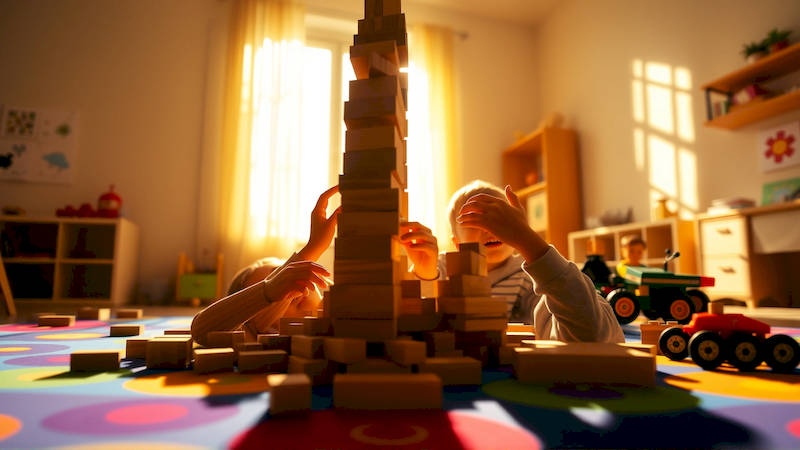
Successfully integrating engineering challenges requires tailoring the complexity to the child's developmental stage. What works for a five-year-old will be drastically different from what captivates a ten-year-old. For toddlers and preschoolers (ages 3-5), the focus should be on open-ended exploration with simple materials like blocks, LEGO Duplos, or recycled items. Challenges might include “Build the tallest tower you can,” or “Create a home for your favorite toy." The emphasis here isn't on a ‘correct’ answer, but on experimentation and discovery.
As children enter elementary school (ages 6-10), challenges can become more structured, introducing basic design principles and constraints. Think about tasks like building a bridge out of straws and tape that can hold a certain weight, designing a boat that can float with a cargo of pennies, or creating a simple machine to lift a small object. These challenges introduce concepts like load bearing, buoyancy, and leverage in a tangible way. For older children (ages 11+), the focus can shift to more complex designs with specific requirements, like building a robotic arm, designing a water filtration system, or creating a working model of a sustainable city. Platforms like Arduino and Raspberry Pi can introduce coding and electronics alongside the engineering process. It’s crucial to remember that even complex challenges should still encourage creative problem-solving and allow for multiple solutions.
The Role of Failure: Embracing the Iterative Design Process
One of the biggest challenges for parents and educators is allowing children to fail. Our instinct is often to step in and ‘fix’ things when we see a child struggling, but that’s precisely the opposite of what they need. Failure is an integral part of the engineering design process, and it’s where some of the most valuable learning happens. When a tower collapses, a boat sinks, or a machine malfunctions, it's an opportunity to ask “What happened?” and “How can we make it better?”
This requires shifting the focus from the outcome to the process. Instead of praising a successful build, praise the child's effort, persistence, and willingness to try different approaches. Ask questions that encourage reflection, such as “What did you learn from that attempt?” or “What would you do differently next time?". It’s vital to create a safe space where children aren’t afraid to experiment and take risks, knowing that setbacks are seen as learning opportunities, not failures. Remind them that even the most accomplished engineers go through countless iterations before arriving at a final design. Thomas Edison famously said, “I have not failed. I’ve just found 10,000 ways that won’t work.” This mindset is crucial to instill in young learners.
Nurturing Collaboration and Communication
Engineering challenges aren’t just about individual problem-solving; they often benefit enormously from collaboration. Working in teams encourages children to share ideas, delegate tasks, and learn from each other's strengths. Collaborative projects also teach essential communication skills – the ability to articulate your ideas clearly, listen to the perspectives of others, and navigate disagreements constructively.
To foster effective collaboration, structure the challenges appropriately. For younger children, assign roles within the team (e.g., builder, designer, materials manager) to encourage participation. For older children, emphasize the importance of brainstorming, planning, and clear communication. Encourage them to document their design process, explaining their choices and reasoning. Facilitate discussions about challenges encountered and how the team worked together to overcome them. Observe team dynamics and provide guidance on conflict resolution and effective teamwork.
Materials and Resources: Beyond the Building Blocks
While LEGOs and building blocks are excellent starting points, the possibilities for engineering challenge materials are endless. Recycled materials – cardboard boxes, plastic bottles, egg cartons, newspaper – are not only budget-friendly but also promote sustainability and resourcefulness. Other useful materials include straws, tape, string, rubber bands, paper clips, aluminum foil, and simple household tools (with appropriate supervision).
Numerous online resources offer pre-designed engineering challenges and lesson plans. Websites like EngineeringGirl (engineeringgirl.org) and PBS Kids Design Squad (pbskids.org/designsquad) provide age-appropriate activities and inspiring examples. Libraries often host STEM programs and workshops, and many museums offer interactive exhibits that encourage engineering exploration. Consider investing in basic maker materials like a simple tool kit, a hot glue gun (for older children with supervision), and a variety of craft supplies. The key is to provide a diverse range of materials that spark creativity and encourage experimentation.
Integrating Engineering Challenges into Everyday Life
You don't need a dedicated STEM lab or expensive materials to incorporate engineering challenges into a child’s life. Look for opportunities to turn everyday situations into problem-solving scenarios. If a toy breaks, can your child help you repair it? If you need to transport a fragile item, can they design a protective package? If you're building a fort, can they engineer a stable structure?
Encourage them to question how things work and to brainstorm solutions to everyday problems. “How could we make our recycling process more efficient?” or “How could we design a better bird feeder?” prompt critical thinking and problem-solving skills. Making it fun is key. Frame the challenges as games or quests, and emphasize the joy of discovery and creation. Avoid providing the solutions directly; instead, guide your child through the problem-solving process by asking questions and offering encouragement.
Conclusion: Building a Future of Problem-Solvers
Encouraging problem-solving skills through engineering challenges is an investment in a child’s future—a future demanding adaptability, innovation, and creative thinking. By providing opportunities for hands-on exploration, embracing the iterative design process, and fostering collaboration, we equip children with the tools they need to thrive in an increasingly complex world. The benefits go beyond STEM fields, impacting every aspect of their lives, from academic success to personal resilience.
Remember, the goal isn't to create a generation of engineers, but a generation of innovative thinkers, resourceful problem-solvers, and confident creators. Start small, be patient, and most importantly, let your child lead the way. Explore simple challenges, provide a supportive environment, and celebrate the journey of discovery. Take that pile of recycled materials, set a loose challenge, and watch a young mind begin to build not just structures, but a future filled with possibility.
Deja una respuesta