
Best Educational Apps for Developing Early Math Skills in Preschoolers
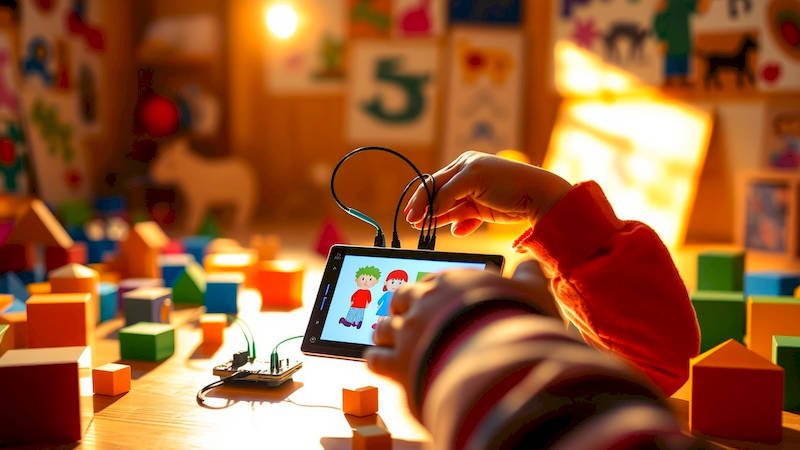
The preschool years are a period of incredible cognitive growth, laying the foundation for future academic success. Among the most crucial skills developed during this time is an understanding of basic mathematical concepts. Traditionally, this meant blocks, counters, and playful exploration with tangible objects. However, in today’s digitally-driven world, educational apps offer a powerful supplement – and sometimes an engaging entry point – to introducing preschoolers to the world of numbers, shapes, and patterns. Selecting the right apps from the vast marketplace can feel daunting. This article provides a comprehensive guide to the best educational apps available for fostering early math skills in preschoolers, outlining what to look for, how to integrate them effectively, and the benefits of a balanced approach. It’s not about replacing traditional learning, but enriching it with thoughtfully chosen technology.
The importance of early math skills extends far beyond simply being able to count to ten. Research consistently demonstrates a strong correlation between early numeracy skills and later academic achievement, particularly in mathematics and reading. A study by the National Association for the Education of Young Children (NAEYC) found that children with strong early math skills enter kindergarten better prepared for success. Furthermore, early engagement with mathematical concepts fosters critical thinking, problem-solving abilities, and a positive attitude towards learning. The key is to make learning fun, interactive, and developmentally appropriate – principles that many high-quality educational apps effectively embrace.
- Understanding the Core Math Concepts for Preschoolers
- Top Apps for Number Sense and Counting
- Exploring Geometry and Spatial Reasoning with Interactive Apps
- Leveraging Patterns and Sequencing Apps for Logical Thinking
- Integrating Apps into a Balanced Learning Environment
- Addressing Concerns: Screen Time and App Quality
- Conclusion: Nurturing a Love for Math Through Playful Exploration
Understanding the Core Math Concepts for Preschoolers
Before diving into specific apps, it's important to understand what mathematical concepts are appropriate and beneficial for preschoolers. This typically includes number sense (recognizing numbers, counting, understanding quantity), geometry (identifying shapes, spatial reasoning), measurement (comparing sizes, lengths), patterns (recognizing and extending sequences), and early problem-solving. Apps designed for this age group should focus on these foundational concepts in a playful and intuitive manner. Avoid apps that push formal arithmetic (addition, subtraction) prematurely, as this can lead to frustration and disinterest. The goal is to build a solid, conceptual understanding, not rote memorization.
A good approach is to think of these concepts as building blocks. Number sense is the foundation. Once a child has a grasp of counting and recognizing quantities, they can begin to explore geometric shapes and spatial relationships. Introducing patterns helps develop logical thinking, which is essential for problem-solving. Apps that seamlessly integrate these concepts, allowing children to explore them through open-ended play and guided activities, are the most effective. Think of apps that ask "how many?" instead of simply testing recall, or those that encourage building with shapes instead of naming them in isolation.
Top Apps for Number Sense and Counting
Several excellent apps focus specifically on building number sense and counting skills. Moose Math by Duck Duck Moose (now part of Khan Academy Kids) consistently receives high praise for its engaging characters and charming graphics. It features a series of mini-games that introduce counting, number recognition, and simple addition/subtraction concepts within a captivating narrative. This app excels at presenting numerical challenges in a visually appealing and age-appropriate manner. Another strong contender is SplashLearn, which offers personalized learning paths based on the child’s progress. It covers counting, number recognition, and comparing numbers with interactive exercises.
These apps often utilize gamification – incorporating game-like elements such as rewards, points, and challenges – to motivate children. However, it’s crucial to choose apps where the learning is the primary focus, and the gamification serves as an enhancement, not a distraction. For example, 123 Numbers by Starfall focuses on straightforward counting and number identification exercises, presenting a simpler, less cluttered experience for children who may be overwhelmed by more elaborate apps. The strength of these apps lies in their proven pedagogies; they inherently understand the stages of numerical development in young children.
Exploring Geometry and Spatial Reasoning with Interactive Apps
Introducing geometric shapes and spatial reasoning is vital for developing problem-solving skills. Shape Builder by Duck Duck Moose encourages children to experiment with different shapes and create their own designs. It’s a fantastic way to foster creativity while reinforcing shape recognition. Similarly, Endless Shapes from Originator Inc. (the creators of Endless Alphabet) utilizes adorable monsters to bring shapes to life, fostering an intuitive understanding of their properties. The app features animations and interactive activities that promote exploration and discovery.
This area benefits from tactile learning experiences, even when delivered digitally. Apps that allow children to manipulate shapes, rotate them, and combine them to create complex figures are particularly valuable. Consider how these apps relate to real-world objects. Encourage your child to identify shapes in their surroundings – a square window, a circular plate, a triangular roof. This helps bridge the gap between the digital world and their everyday experiences, solidifying their understanding. These type of playful and hands-on digital experiences are invaluable for little ones.
Leveraging Patterns and Sequencing Apps for Logical Thinking
Recognizing and extending patterns is a fundamental skill that underpins many mathematical concepts. Pattern Play is a dedicated app designed to help children develop this skill through engaging visual puzzles. It presents various patterns using colors, shapes, and objects, challenging children to identify the missing element. Alternatively, PBS KIDS Games App often includes games that incorporate patterns and sequencing within a larger educational context – for instance, following a sequence to build a tower or complete a picture.
The benefit of apps focusing on patterns lies in their simplicity. They don’t require advanced mathematical knowledge, but they promote essential logical thinking skills. Encourage your child to create their own patterns using real-world objects – beads, blocks, crayons. Discuss the patterns they create, asking questions like “What comes next?” or “What is the rule for this pattern?” This reinforces the concept and encourages them to articulate their reasoning.
Integrating Apps into a Balanced Learning Environment
While educational apps can be a valuable tool, they should never replace traditional learning experiences. The most effective approach is to integrate them into a balanced learning environment that includes hands-on activities, books, and real-world exploration. Limit screen time and ensure that app usage is supervised, especially for younger preschoolers. Consider setting aside specific times for app-based learning, and be actively involved in the process – playing alongside your child, asking questions, and encouraging them to explain their thinking.
Furthermore, it’s crucial to select apps that align with your child's individual learning style and pace. Some children thrive in a structured environment, while others prefer open-ended exploration. Look for apps that offer different levels of challenge and customization options. Remember, learning should be fun and engaging. If your child is becoming frustrated or disengaged, take a break and try a different activity. A recent study published in Computers & Education (2022) emphasized the crucial role of parental involvement in maximizing the educational benefits of digital learning apps.
Addressing Concerns: Screen Time and App Quality
Concerns about screen time are valid, and it’s essential to approach app usage with moderation and mindfulness. The American Academy of Pediatrics recommends limiting screen time for children aged 2-5 to one hour per day of high-quality programming, and co-viewing with a parent or caregiver is strongly encouraged. Prioritize apps that are ad-free, age-appropriate, and designed by reputable educational organizations. Be wary of apps that promote in-app purchases or collect excessive personal data.
Evaluating app quality is paramount. Look for apps that are based on sound pedagogical principles, align with early learning standards, and offer opportunities for active engagement. Read reviews from other parents and educators, and consider trying out free versions or trials before committing to a paid subscription. Remember that more expensive doesn’t necessarily mean better. A simple, well-designed app can be just as effective as a more elaborate one.
Conclusion: Nurturing a Love for Math Through Playful Exploration
Developing early math skills is pivotal for a child’s future academic success and overall cognitive development. Educational apps, when selected and integrated thoughtfully, can be a powerful tool for nurturing a love for math through playful exploration. By focusing on core concepts like number sense, geometry, and patterns, and by balancing digital learning with hands-on activities and real-world experiences, parents and educators can create a rich and engaging learning environment that sets preschoolers up for success. Remember to prioritize app quality, manage screen time responsibly, and actively participate in your child's learning journey. The goal isn’t just to teach math; it’s to inspire curiosity, foster critical thinking, and lay the foundation for a lifetime of learning. The best apps will be those that spark joy and allow a child’s natural curiosity to flourish, building that crucial foundation for success in mathematics and beyond.
Deja una respuesta