
Developing Critical Thinking Through Interactive STEM Board Games
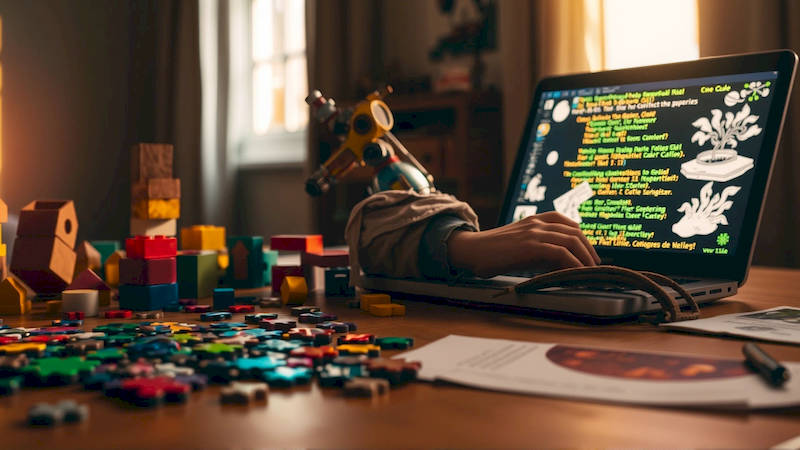
In today’s rapidly evolving world, rote memorization is no longer sufficient for success. The ability to think critically – to analyze information, solve problems, and make informed decisions – is arguably the most valuable skill we can instill in our children. While traditional education focuses on what to learn, cultivating critical thinking centers on how to learn. STEM (Science, Technology, Engineering, and Mathematics) education offers a fantastic foundation for this, but it doesn’t always translate into readily-applicable critical thinking skills. This is where the often-underestimated power of board games comes into play. Far from being mere entertainment, thoughtfully selected STEM board games can be remarkably effective tools for fostering these crucial cognitive abilities in kids of all ages and learning styles.
The allure of board games extends beyond simply keeping children occupied. They provide a safe, low-pressure environment for experimentation, failure, and learning from mistakes. Unlike academic settings where a wrong answer might be penalized, board games allow for iterative exploration and problem-solving without significant consequences. This encourages children to take risks, try new strategies, and develop resilience – all vital components of critical thinking. Moreover, the social interaction inherent in most board games promotes collaboration, communication, and the ability to consider multiple perspectives, further enriching the learning experience. This article will delve into how interactive STEM board games can be used to specifically develop critical thinking skills in children, outlining game recommendations and practical strategies for maximizing their educational impact.
- The Connection Between STEM, Board Games, and Critical Thinking
- Identifying STEM Board Games That Foster Critical Thinking
- Leveraging Gameplay for Deeper Learning: Asking the Right Questions
- Adapting Games to Different Learning Styles and Skill Levels
- Beyond the Game: Extending the Learning Experience
- Potential Pitfalls and How to Avoid Them
- Conclusion: Cultivating a Critical-Thinking Mindset
The Connection Between STEM, Board Games, and Critical Thinking
The core principles of STEM naturally lend themselves to the development of critical thinking. Science encourages observation, experimentation, and data analysis. Technology demands logical sequencing and problem-solving. Engineering necessitates design thinking and iterative improvements. And mathematics builds analytical skills and abstract reasoning. Board games, when designed with STEM concepts in mind, can effectively integrate these principles into a playful and engaging context. However, not all STEM games are created equal; the most effective ones aren’t simply about facts and figures, but about the process of discovery and deduction.
Critical thinking isn’t a single skill, but rather a constellation of abilities. These include analysis – breaking down complex information into smaller parts, evaluation – assessing the credibility and relevance of information, inference – drawing logical conclusions based on evidence, and problem-solving – identifying and implementing effective solutions. STEM board games can target each of these skills. For example, a game that requires players to build a structure using limited resources (engineering) implicitly asks them to analyze material properties, evaluate design constraints, and infer the most stable construction method. “According to research by the National Research Council, games that embed learning within a motivating context, such as a narrative, can significantly enhance cognitive development,” states Dr. Anya Sharma, a cognitive psychologist specializing in learning through play.
Furthermore, the interactive nature of board games forces children to actively participate in the learning process. They're not passively receiving information but are actively applying concepts, making decisions, and observing the consequences. This active engagement is crucial for cementing understanding and developing lasting critical thinking skills. Consider the difference between reading about circuitry versus building a simple circuit in a game — the hands-on application transforms abstract concepts into tangible experiences. This tactile learning, combined with the challenge of achieving a goal, drastically increases knowledge retention and promotes a deeper level of understanding.
Identifying STEM Board Games That Foster Critical Thinking
The market is brimming with STEM-themed board games, but discerning those that truly cultivate critical thinking requires careful consideration. Focus on games that prioritize strategy, problem-solving, and logical reasoning over mere memorization or chance. Games with open-ended solutions, multiple pathways to victory, and opportunities for collaboration are particularly valuable. Age-appropriateness is also crucial – a game that’s too complex will be frustrating, while one that’s too simple won’t be challenging enough.
Some excellent examples include Robot Turtles, designed for pre-schoolers, which introduces fundamental programming concepts through a simple, visual game. For slightly older children (ages 8+), Code Master presents coding challenges in a puzzle format, requiring strategic thinking and logical deduction. Rush Hour is a classic logic puzzle game that challenges players to maneuver vehicles to clear a path, promoting spatial reasoning and planning skills. Photosynthesis (ages 8+) beautifully illustrates ecological concepts and strategic resource management, encouraging players to think long-term and anticipate the consequences of their actions. Ticket to Ride (ages 8+) while not explicitly STEM labelled, requires route planning, resource allocation, and strategic blocking, all vital critical thinking skills. “When selecting games," advises Maria Rodriguez, an educational game designer, "look for those that encourage ‘productive struggle’ - a level of challenge that requires effort and problem-solving but isn’t overwhelmingly difficult."
Don't overlook cooperative games. While competitive games can be valuable for developing strategic thinking, cooperative games emphasize collaboration, communication, and shared problem-solving. Games like Forbidden Island or Pandemic require players to work together to achieve a common goal, forcing them to share information, consider different perspectives, and coordinate their actions – skills essential for effective critical thinking.
Leveraging Gameplay for Deeper Learning: Asking the Right Questions
Simply playing a STEM board game isn't enough; you need to actively guide your child's thinking during the game. Don’t provide answers outright, but instead, ask open-ended questions that prompt them to analyze the situation, evaluate their options, and explain their reasoning. Instead of saying "You should move your piece here," try "What do you think would happen if you moved your piece there?" or “What other strategies could you try?”.
Effective questioning techniques include asking “why” questions (“Why did you choose to do that?”), “what if” scenarios (“What if you didn’t have that particular resource?”), and “how” questions (“How can you improve your design?”). Encourage your child to articulate their thought process, even if their initial strategy isn't successful. This process of verbalizing their reasoning helps solidify their understanding and identify areas for improvement. After the game, debrief together. Discuss the strategies used, the challenges encountered, and what could be done differently next time. This critical reflection is a vital component of learning. It's less about winning or losing and much more about the reasoning process behind the game.
Another useful technique is to highlight the connections between the gameplay and real-world applications. For example, when playing a game that involves building structures, discuss how engineers use similar principles to design bridges or buildings. This helps children see the relevance of STEM concepts in their daily lives and strengthens their understanding of the underlying principles.
Adapting Games to Different Learning Styles and Skill Levels
Children learn in different ways, and a one-size-fits-all approach to STEM education rarely works. Be mindful of your child’s learning style – visual, auditory, kinesthetic – and adapt the gameplay accordingly. For visual learners, encourage them to draw diagrams or sketches to visualize their strategies. For auditory learners, engage them in discussions about the game and encourage them to explain their reasoning verbally. For kinesthetic learners, let them manipulate the game pieces and physically experiment with different approaches.
Furthermore, modify the game’s rules or challenges to match your child’s skill level. For younger children or those new to STEM concepts, simplify the rules or provide additional support. For older children or those who are more advanced, introduce optional challenges or constraints to increase the complexity. You can also create your own variations of the game to emphasize specific skills or concepts. For instance, in a resource management game, you might add a sudden "natural disaster" event to challenge players to adapt and respond to unexpected circumstances. Constantly adjusting the game presents fresh opportunities for critical thought and prevents boredom.
Beyond the Game: Extending the Learning Experience
The benefits of STEM board games shouldn’t be confined to the game itself. Extend the learning experience by incorporating related activities and projects. If your child enjoys a game that involves building structures, encourage them to build their own creations using household materials. If they enjoy a game that involves coding, introduce them to online coding resources or coding apps. Encourage exploration.
One effective approach is to connect the game to real-world problems. For example, if playing a game about environmental sustainability, discuss current environmental challenges and brainstorm potential solutions. Be creative and find ways to make STEM learning relevant and engaging. A simple extension activity could be documenting the strategy used during the game, outlining the rationale for choices, and analyzing potential improvements. This documentation process further reinforces critical thinking skills and encourages reflection.
Potential Pitfalls and How to Avoid Them
While STEM board games offer many benefits, there are also potential pitfalls to be aware of. One common issue is frustration. If a game is too difficult, it can discourage children and undermine their confidence. Be prepared to offer assistance and encouragement, and remember that the process of learning is more important than winning. Another potential pitfall is focusing too heavily on competition. While healthy competition can be motivating, it’s important to emphasize collaboration and learning over winning at all costs.
Furthermore, be mindful of gender stereotypes. Encourage both boys and girls to participate in STEM activities and choose games that appeal to a wide range of interests. Finally, avoid simply telling your child the "right" answer. Instead, guide them through the problem-solving process and allow them to discover the solution on their own. Allowing them to struggle – within a supportive environment – is crucial for fostering resilience and independent thinking.
Conclusion: Cultivating a Critical-Thinking Mindset
Integrating interactive STEM board games into your child's learning routine is a powerful strategy for developing critical thinking skills. By choosing games that prioritize strategy, problem-solving, and collaboration, and by actively facilitating their learning through thoughtful questioning and adaptation, you can help your child develop the cognitive abilities they need to thrive in an increasingly complex world. Remember that the ultimate goal isn't simply to teach STEM concepts, but to cultivate a critical-thinking mindset—a love of learning, a willingness to experiment, and the ability to approach challenges with confidence and creativity.
Key takeaways include: prioritize games with flexible solutions, actively question and guide your child's reasoning, personalize the experience to their learning style, and extend the learning beyond the game itself. Start small, be patient, and most importantly, have fun! By embracing the power of play, you can empower your child to become a confident, independent, and critical thinker for life.
Deja una respuesta