
Organizing Science Clubs at Home: Simple Experiments for Curious Kids
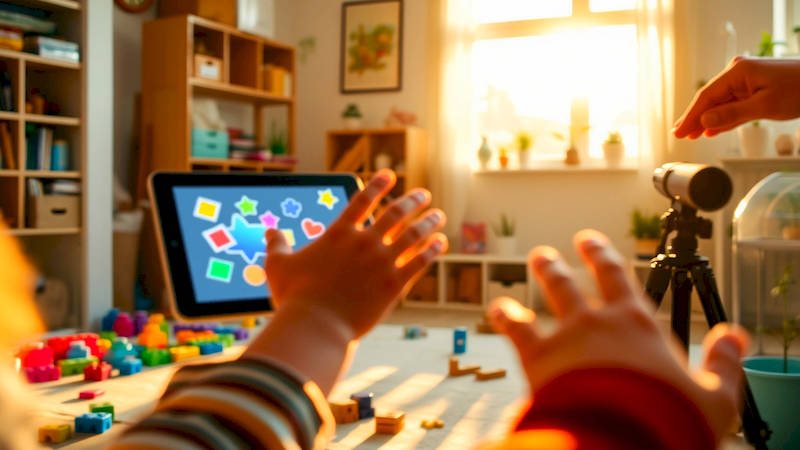
The thirst for knowledge is innate in children, and science, with its inherent exploration and discovery, often captures their imagination like no other subject. While formal science education is vital, nurturing that curiosity outside the classroom is equally important. Home-based science clubs offer a fantastic avenue for this, providing a relaxed, engaging environment where kids can delve into scientific concepts through hands-on experimentation. This isn’t about replicating a school lab; it's about fostering a love of learning, critical thinking, and problem-solving skills – all while having fun.
In today’s world, where STEM (Science, Technology, Engineering, and Mathematics) fields are increasingly dominant, encouraging early engagement with scientific principles is more crucial than ever. According to the U.S. Bureau of Labor Statistics, STEM occupations are growing at a faster rate than non-STEM occupations, highlighting the importance of preparing the next generation. A home science club provides foundational skills and ignites a passion that could potentially lead to future STEM careers, but more importantly, fosters a scientifically literate citizenry.
Creating a successful home science club doesn't require a vast budget or extensive scientific expertise. It’s about leveraging readily available materials, encouraging experimentation, and prioritizing the process of discovery over achieving “perfect” results. This article will guide you through organizing a thriving science club, providing simple, engaging experiments, and fostering a lifelong love of learning in your children and their friends. The emphasis will be on accessibility, affordability, and, above all, fun.
- Getting Started: Planning & Safety First
- Simple Chemistry Experiments to Ignite Curiosity
- Physics Fun: Exploring Forces and Motion
- Biological Investigations: A Microscopic World
- Embracing the Scientific Method: Observation, Hypothesis, & Conclusion
- Beyond the Experiments: Resources & Community
- Conclusion: Nurturing a Lifelong Love of Science
Getting Started: Planning & Safety First
Before diving into experiments, careful planning is essential. First, determine the age range and interests of the children involved. A club for 6-8 year olds will necessitate simpler experiments and closer supervision than one geared towards 10-12 year olds. Consider a theme-based approach – maybe a month focused on chemistry, followed by physics, and then biology. This provides focus and allows for deeper exploration within each field. Don't overcommit; starting with once-a-week or bi-weekly meetings is manageable.
Safety is paramount. Every experiment requires a discussion of potential hazards and appropriate safety precautions. This isn't about scaring children, but about empowering them to think critically about risks. Always have adult supervision present, and enforce rules like wearing safety goggles (even for seemingly harmless experiments – eye protection is crucial!), wearing aprons or old clothes, and no tasting of materials. A well-stocked first-aid kit should always be within reach and parents should be informed of specific activities.
Finally, involve the kids in the planning process! Ask them what areas of science they're most curious about. This creates a sense of ownership and increases their engagement. Brainstorming experiment ideas together also provides a valuable learning opportunity in itself – discussing what materials are needed, what safety concerns might arise, and what results they expect.
Simple Chemistry Experiments to Ignite Curiosity
Chemistry often seems complex, but many fascinating demonstrations can be performed with household ingredients. One classic is the “Baking Soda and Vinegar Volcano.” This demonstrates a simple acid-base reaction, producing carbon dioxide gas, which creates the eruption. Simply mix baking soda with a little water to form a paste inside a plastic bottle. Then, add vinegar, stand back, and watch the “lava” flow. To enhance the visual appeal, add a few drops of red food coloring to the vinegar.
Another engaging experiment is creating “Crystal Geodes.” Borax, dissolved in hot water, allows for the growth of beautiful crystals on pipe cleaners shaped into desirable forms. This visual demonstration of solubility and crystallization is captivating for children. It’s a longer-term experiment, taking several hours or overnight, which teaches patience and observation. Remind kids that borax is not edible and proper handwashing is required after handling the solution.
Finally, explore the principles of density with a “Rainbow Density Tower.” Layer different liquids – honey, corn syrup, dish soap, water (colored with food dye), vegetable oil, and rubbing alcohol – in a tall glass. Each liquid will settle according to its density, creating a visually stunning rainbow effect. This provides a great opportunity to discuss the characteristics of different substances and how they interact.
Physics Fun: Exploring Forces and Motion
Physics explains how things move, and there are countless ways to demonstrate these principles at home. Building simple machines is a fantastic starting point. Constructing a lever using a ruler and a fulcrum (a small block of wood or a stack of books) allows children to explore how force and distance affect lifting objects. Experimenting with different fulcrum positions shows how mechanical advantage works.
Exploring gravity and air resistance can be achieved with a simple paper airplane construction challenge. Encourage children to design different airplane shapes and compare their flight distances. This highlights the impact of wing shape, weight distribution, and surface area on aerodynamic performance. A great add-on is measuring the flight distance accurately with a measuring tape, introducing the concept of quantitative data collection.
A demonstration of inertia can be performed using a tower of blocks or coins on a piece of cardboard. Quickly pull the cardboard horizontally, and the blocks or coins will stay relatively in place, demonstrating how objects resist changes in their motion. This illustrates Newton’s First Law of Motion in a way that’s easy for children to grasp.
Biological Investigations: A Microscopic World
Biology brings the natural world to life, and home-based investigations can be remarkably rewarding. Examining leaves, flowers, and insects under a magnifying glass or a beginner’s microscope opens up a whole new world of detail. Encourage children to sketch what they observe, fostering their observational skills and artistic abilities. Collecting and identifying different types of leaves introduces basic botany principles.
Growing plants from seeds offers an excellent opportunity to learn about the life cycle of plants and the importance of sunlight, water, and nutrients. Planting beans in a clear plastic cup allows children to observe the roots developing. This connects theory to readily visible evidence. Comparing growing conditions (e.g., different amounts of light or water) will introduce the concept of variables in a simple experiment.
Creating a compost bin provides a practical demonstration of decomposition and the role of microorganisms. Observing how organic waste breaks down over time illustrates the interconnectedness of living things and the importance of nutrient cycling. Just make sure the compost bin is properly maintained to avoid unpleasant odors.
Embracing the Scientific Method: Observation, Hypothesis, & Conclusion
Constantly emphasize the scientific method throughout all experiments. This isn’t about rigidly following a fixed formula, but about developing a logical approach to problem-solving. Start with an observation – “Why does this happen?” – and guide children to formulate a hypothesis – an educated guess about the answer. Then, design and conduct an experiment to test their hypothesis.
Encourage meticulous observation and data recording, even if it’s simply sketching what they see or making tally marks. After the experiment, discuss the results. Did the results support the hypothesis? If not, why might that be? This is where the real learning happens – understanding that failure is a valuable part of the scientific process. Emphasize that it's not about being "right" or "wrong," but about learning from the data.
Dr. Carl Sagan famously said, "Science is a way of thinking more than it is a body of knowledge." Instilling this mindset is the core goal of a home science club. It's about nurturing intellectual curiosity, fostering critical thinking skills, and empowering children to explore the world around them with a sense of wonder and excitement.
Beyond the Experiments: Resources & Community
Numerous resources can enhance your home science club. Websites like Science Buddies (https://www.sciencebuddies.org/) and Exploratorium (https://www.exploratorium.edu/) offer a wealth of experiment ideas and educational materials. Local libraries often have science-related books and programs. Consider connecting with other homeschooling families or forming a virtual science club to share ideas and collaborate.
Don't be afraid to invite guest speakers – a local scientist, engineer, or even a passionate hobbyist. Hearing about someone's real-world application of science can be incredibly inspiring. Documenting the club’s activities through photos or videos creates a lasting record of learning and can be shared with family and friends. This also promotes accountability and encourages continued engagement.
Conclusion: Nurturing a Lifelong Love of Science
Organizing a science club at home is a remarkably rewarding endeavor. It’s not about turning your children into future scientists, although that would be a welcome outcome. It's about igniting a passion for learning, fostering critical thinking skills, and equipping them with the tools to explore the world around them with curiosity and confidence.
The key takeaways are simple: prioritize safety, embrace experimentation, and emphasize the scientific method. Remember to tailor the activities to the age and interests of the children involved, and most importantly, have fun! By creating a supportive and engaging environment, you can nurture a lifelong love of science that will benefit your children for years to come. The journey of discovery is an endless one and starting at home is a wonderful place to begin.
Deja una respuesta