
Organizing Playdates that Promote Positive Peer Relationships
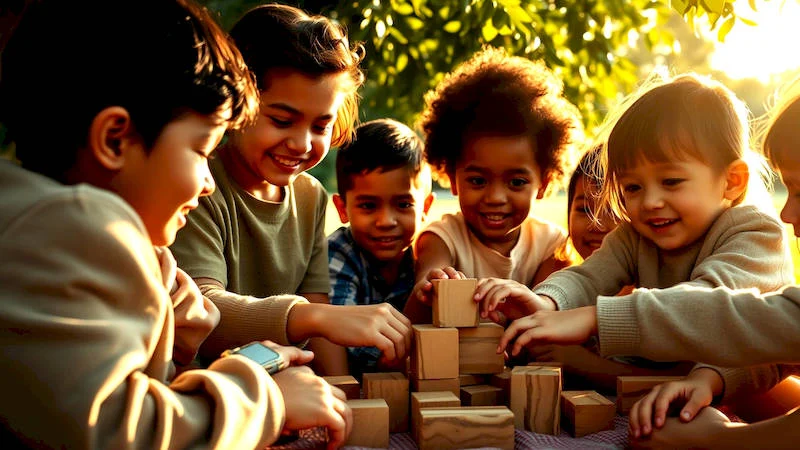
Playdates are more than just opportunities for kids to burn off energy; they are crucial learning grounds for developing vital social skills. In a world increasingly focused on academic achievement, the importance of nurturing a child's ability to navigate social interactions – to share, cooperate, resolve conflicts, and empathize – is paramount. These skills aren’t innate; they are learned through practice, and playdates, when thoughtfully organized, provide the perfect setting for this development. As Dr. Laura Markham, author of Peaceful Parent, Happy Kids, notes, "Social skills are learned, not born with. Every interaction is a learning opportunity for children.” This article will provide a comprehensive guide to crafting playdates that foster positive peer relationships, laying the foundation for healthy social-emotional growth.
The modern childhood landscape often sees children overscheduled and with limited unstructured play time. This can lead to difficulty reading social cues and navigating the complexities of friendship. Consequently, proactive parenting when it comes to facilitating and guiding social interactions is essential. A well-planned playdate isn't about providing constant entertainment; it's about creating an environment where children can practice social skills with minimal adult intervention, while still feeling safe and supported. This involves careful consideration of the guest list, the activities offered, and the space itself. By prioritizing quality over quantity and focusing on fostering authentic connection, you can transform a simple playdate into a powerful tool for social development.
- The Art of the Guest List: Quality Over Quantity
- Setting the Stage: Environment and Available Resources
- Facilitating, Not Directing: The Role of the Parent
- Promoting Prosocial Behaviors: Modeling and Encouragement
- Dealing with Challenging Behaviors: Compassion and Consistency
- Post-Playdate Debrief: Reflection and Reinforcement
The Art of the Guest List: Quality Over Quantity
Choosing the right playdate partners is arguably the most important step. While it’s tempting to invite the entire class, limiting the number of attendees to 2-3 children often yields the most positive results. Overcrowding can overwhelm young children, leading to increased competition for attention, resources and ultimately, conflict. A smaller group allows for more focused interaction and provides opportunities for each child to truly engage with their peers. Consider your child's personality too; some thrive in larger groups, while others do better with fewer connections.
Beyond the number, think about compatibility. Observe your child’s interactions at school or in other settings. Who do they naturally gravitate towards? Who seems to share similar interests and play styles? Inviting children who are generally kind, respectful, and have a positive energy will significantly increase the likelihood of a successful playdate. Don’t shy away from inviting children with different personalities, but be mindful of potential pairings. For example, a child who is very assertive might benefit from playing with a more passive child, but careful observation is critical to ensure neither feels dominated.
Finally, don't underestimate the power of familiar faces. Starting with children your child already knows and feels comfortable with can build confidence and ease anxiety. "Children learn best when they feel safe and secure," says child psychologist Dr. Helen Egger. “Familiarity contributes to this sense of security, allowing them to focus on developing social skills rather than worrying about the unknown.” As your child gains confidence, you can gradually widen the circle, helping them develop the skills to navigate new social situations.
Setting the Stage: Environment and Available Resources
The environment plays a crucial role in shaping the playdate experience. A thoughtfully prepared space encourages positive interaction and minimizes potential conflict. Having a designated play area, free from distractions like television or complex electronic games, is vital. This area should be safe, accessible, and offer a variety of open-ended materials that foster creativity and collaboration. Think building blocks, art supplies, dress-up clothes, or simple board games. Avoid toys that are overly structured or have specific "rules" that can limit imaginative play and create disagreements.
Consider the physical layout of the space. Is there enough room for children to move around freely? Are there clear boundaries to help them understand acceptable play behavior? Providing multiple “stations” or activity areas can prevent overcrowding and give children options for independent or collaborative play. For example, one corner might be dedicated to building, another to art, and a third to dramatic play. A well-organized space sends a subtle message to children that you value their play and are creating a welcoming environment.
Furthermore, anticipate potential challenges. Child-proof the play area to prevent accidents, and have a readily available stash of simple snacks and drinks to avoid disputes over resources. Be mindful of potential triggers for conflict, such as highly coveted toys, and consider having duplicates available or rotating items throughout the playdate. A calm and inviting environment will set the tone for a positive and productive social interaction.
Facilitating, Not Directing: The Role of the Parent
One of the biggest mistakes parents make is over-directing playdates. While it's natural to want to ensure everyone is having fun, excessive intervention can stifle children's social development and prevent them from learning to navigate challenges independently. Your role is to be a supportive facilitator, providing guidance when needed, but allowing the children to take the lead. Observe their interactions from a distance, intervening only if safety is compromised or conflict escalates beyond their ability to resolve it.
When conflict does arise – and it inevitably will – resist the urge to immediately "fix" the situation. Instead, use it as a teaching opportunity. Encourage the children to communicate their feelings, listen to each other's perspectives, and brainstorm solutions together. Instead of saying, “You have to share the truck,” try, “I see that both of you want to play with the truck. How can you work it out so that everyone gets a turn?” This empowers them to develop problem-solving skills and practice empathy.
Remember, children need opportunities to experience and navigate conflict on their own. "Allowing children to struggle a bit helps them build resilience and develop their own strategies for coping with challenges," explains Adele Faber and Elaine Mazlish, authors of How to Talk So Kids Will Listen & Listen So Kids Will Talk. Your presence should be one of quiet support, offering gentle guidance and reassurance when needed, but allowing the children to be the architects of their own play experience.
Promoting Prosocial Behaviors: Modeling and Encouragement
Children learn by example, so modeling prosocial behaviors is critical. Demonstrate kindness, empathy, and respectful communication in your own interactions, both with your child and with the other children. Use manners, offer compliments, and show genuine interest in their play. This subtle but powerful teaching tool will demonstrate the kind of behavior you want to see them exhibit.
Actively encourage prosocial behaviors during the playdate. When you see a child sharing, cooperating, or showing empathy, offer specific praise. Instead of simply saying, "Good sharing," try, "I noticed how you let Sarah use the blue crayon, even though you were using it. That was very kind and thoughtful.” Specific praise reinforces the positive behavior and helps the child understand why it’s valued.
Moreover, create opportunities for cooperative play. Suggest activities that require children to work together, such as building a fort, creating a story, or completing a puzzle. These activities promote teamwork, communication, and problem-solving skills. Be aware though, that cooperative activities shouldn’t be forced. Sometimes simply providing the materials and stepping back is enough to encourage collaboration.
Dealing with Challenging Behaviors: Compassion and Consistency
Every child has moments of challenging behavior, and playdates can sometimes bring these to the surface. Whether it’s hitting, grabbing, or refusing to share, it's important to address these behaviors with compassion and consistency. Avoid reacting with anger or punishment, as this can escalate the situation and damage the child’s self-esteem. Instead, calmly and firmly state the expectation, along with the consequence for not meeting it.
For example, if a child is hitting, say, “Hitting hurts. We don't hit. If you hit again, the playdate will need to end.” Then, follow through with the consequence if the behavior persists. Consistency is key; children need to know that the rules are the same, regardless of the situation. Simultaneously focus on understanding the reason behind the behavior. Is the child feeling frustrated, overwhelmed, or insecure? Addressing the underlying need can prevent future outbursts.
Remember, playdates are a learning experience for everyone involved. Challenging behaviors are opportunities for growth, not failures. By responding with compassion, consistency, and a focus on teaching, you can help children learn to manage their emotions and develop positive social skills.
Post-Playdate Debrief: Reflection and Reinforcement
The learning doesn't end when the playdate is over. Take a few minutes to debrief with your child, talking about what went well and what could have gone better. Avoid criticism; instead, focus on specific behaviors and their consequences. For example, you might say, “I noticed you were very patient with Liam when he was having trouble building the tower. That was really kind of you.”
Ask open-ended questions to encourage reflection. “What was your favorite part of the playdate?” “Was there anything that was difficult for you?” These questions invite your child to process their experiences and develop self-awareness. Reinforce the prosocial behaviors you observed during the playdate, and brainstorm strategies for handling similar situations in the future.
Finally, acknowledge and validate your child's feelings. Playdates can be emotionally taxing, even for children who enjoy socializing. Let them know that it’s okay to feel tired, frustrated, or overwhelmed. Providing a safe and supportive space for them to process their experiences will help them build resilience and a positive attitude towards social interaction.
In conclusion, organizing playdates that promote positive peer relationships requires thoughtful planning, mindful facilitation, and a commitment to fostering social-emotional growth. By prioritizing quality over quantity, creating a supportive environment, modeling prosocial behaviors, and engaging in post-playdate reflection, parents can transform these seemingly simple interactions into powerful learning experiences. Remember that the goal isn't just to entertain children but to equip them with the skills they need to build healthy, meaningful relationships throughout their lives. These interactions contribute directly to a child’s overall well-being, impacting their academic performance, emotional regulation, and future success, making the investment of time and consideration in skillfully orchestrated playdates truly worthwhile.
Deja una respuesta