How to Teach Toddlers Sharing Through Play
Sharing. It’s a word that evokes both hope and frustration for parents of toddlers. We all recognize its importance – sharing is a cornerstone of social development, teaching empathy, cooperation, and negotiation skills. Yet, a toddler’s world is fundamentally mine focused. Their sense of self is still emerging, and possessions are extensions of that self. Expecting spontaneous, selfless sharing is often unrealistic and can lead to power struggles and tears. However, teaching sharing isn’t about forcing toddlers to relinquish their treasures on command. It’s a gradual process built on understanding their developmental stage and utilizing the power of play to nurture generosity. This article will delve into practical strategies, avoiding common pitfalls, and turning sharing time into positive learning experiences.
The challenge with teaching sharing isn't that toddlers are inherently selfish, but rather that they haven't yet developed the cognitive abilities to truly understand another person’s perspective. A study by the University of Washington showed that consistent prosocial behavior, like sharing and helping, doesn’t typically emerge until around age 4, and is strongly linked to the development of theory of mind – the ability to understand that others have thoughts, feelings, and beliefs different from our own. Before this milestone, sharing relies heavily on adult guidance and scaffolding. Trying to force a toddler to share before they are developmentally ready often backfires, creating resentment and further reinforcing possessive behavior. This article seeks to provide a phased approach, fostering the foundational skills needed for genuine sharing as your child grows.
- Understanding the Toddler Brain: Why Sharing is Such a Struggle
- Laying the Foundation: Empathy and Emotional Language
- Turning Playtime into Sharing Opportunities
- The Power of Prompting and Modeling
- "My Turn, Your Turn": Establishing a System
- Beyond Toys: Sharing Attention and Experiences
- Conclusion: Cultivating a Culture of Generosity
Understanding the Toddler Brain: Why Sharing is Such a Struggle
Toddlers, generally between the ages of 1 and 3, are in a period of rapid brain development. This is a time of intense egocentrism, where the world revolves around their needs and experiences. They're concrete thinkers, meaning they struggle with abstract concepts like "fairness" or "taking turns." Cognitive limitations impact their ability to understand that sharing doesn't mean losing something forever; they perceive it as a permanent removal of a valued object. This is biologically normal! The prefrontal cortex, the part of the brain responsible for impulse control and future planning, is still under construction. Therefore, inhibiting the impulse to hold onto a desired object is incredibly difficult.
Furthermore, toddlers are learning about boundaries and ownership. Saying “no” and protecting their possessions are crucial parts of establishing their independence and sense of self. This isn’t stubbornness; it’s a healthy developmental stage. Karen Pine, a developmental psychologist, emphasizes that “Toddlers aren’t necessarily being deliberately difficult. They are experimenting with boundaries and trying to assert their independence.” Attempting to override this natural process by demanding immediate sharing can actually hinder their emotional and cognitive growth. The key isn't to eliminate possessive behavior but to guide it constructively.
Laying the Foundation: Empathy and Emotional Language
Before directly tackling sharing, focus on building your toddler’s emotional intelligence. Teaching them to identify and label their own feelings, and to recognize emotions in others, is a crucial first step. When your child is upset about wanting a toy another child has, validate their feelings: “I see you’re feeling frustrated because Leo has the red truck, and you want a turn.” Connect those feelings to the other child: “Leo is having fun playing with the truck right now.” This helps them begin to understand that others experience their own emotions, separate from their own.
Introduce simple books and games that focus on feelings. Discuss characters’ emotions in stories and ask questions like, “How do you think the bear feels when the little bird takes his berries?” Modeling empathy yourself is also essential. When someone does something kind for you, say aloud, "That was very kind of Sarah to share her cookie with me. It makes me feel happy!" Repeated exposure to empathetic language will gradually help your toddler begin to internalize those concepts. Consider using puppets or stuffed animals to act out scenarios involving sharing and feelings, further reinforcing emotional understanding.
Turning Playtime into Sharing Opportunities
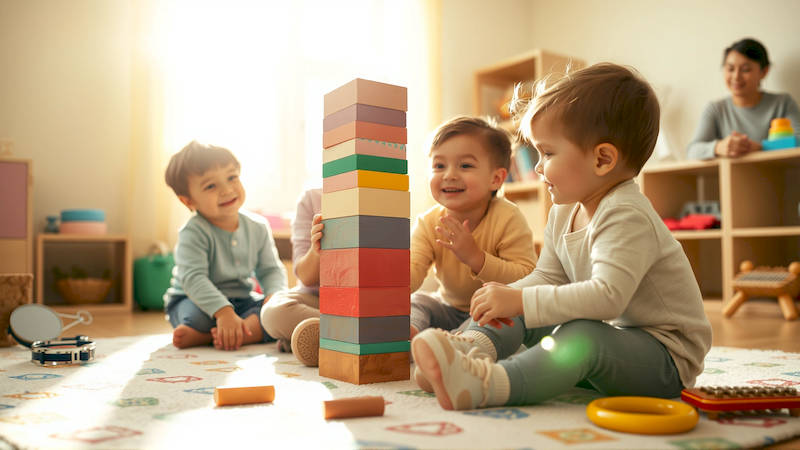
Structured playdates can be a breeding ground for sharing challenges, but with thoughtful preparation, they can also be excellent learning opportunities. Don’t spring a playdate on your toddler without warning. Prepare them beforehand by discussing that they will be playing with a friend and that they might need to share toys. Introduce the concept of turns clearly: "We'll take turns with the blocks. You play with them for five minutes, then it's Lily's turn for five minutes." Using a visual timer can be incredibly helpful here, as it provides a concrete representation of time passing.
Avoid situations that are guaranteed to cause conflict. If your toddler has a particularly prized possession that they’re not willing to share, put it away before the playdate begins. Instead, provide a selection of toys that are less “precious” and more conducive to collaborative play. Encourage parallel play—where children play alongside each other but not necessarily with each other—as a starting point. This allows them to become comfortable with sharing space without the pressure of direct sharing.
The Power of Prompting and Modeling
Instead of simply telling your toddler to share, prompt them with gentle cues. For example, if a friend asks for a toy, you could say, “Oh, Amelia would really like to try building with those blocks. What do you think?” This gives your child the opportunity to make the decision themselves, rather than feeling forced. If they hesitate, you can offer suggestions: "Maybe you could let her build a tower with them, and then you can build a house?"
Modeling sharing yourself is paramount. Let your child see you sharing with others—a piece of your food, a book, your time. Narrate your actions: "I'm sharing my apple slices with Mommy. It's nice to share!" Be mindful of how you react when you are asked to share. If you grumble or express reluctance, your child will internalize that behavior. Remember, children learn far more from what we do than from what we say.
"My Turn, Your Turn": Establishing a System
Introduce a clear “my turn, your turn” system. This provides a structured framework for sharing that toddlers can easily understand. You can use a simple object like a toy car or a stuffed animal as the “turn-taker.” When it’s your child’s turn, they hold the object. When it’s their friend’s turn, the object passes to their friend.
Be consistent with the turns and enforce the boundaries fairly. Resist the urge to intervene unless absolutely necessary, allowing children to learn to negotiate and resolve minor conflicts. However, be ready to step in if the situation escalates or if one child is consistently being excluded. The objective is not just turn-taking, but also patience and the understanding that everyone gets a chance. Visual cues, like drawing a simple chart with “My Turn” and “Your Turn” sections, can be particularly helpful for toddlers.
Beyond Toys: Sharing Attention and Experiences
Sharing isn’t limited to physical objects. Encourage sharing of attention, experiences, and ideas. Model this by actively listening to your child's stories and showing genuine interest in their creations. Engage in activities that require collaboration, like building a fort together or painting a mural. Sharing positive attention and experiences fosters a sense of connection and generosity.
Focus on the process of sharing rather than the outcome. Praise effort and kindness, not just the act of relinquishing a toy. “I noticed how kind you were to let Leo play with your truck. That was very thoughtful of you.” This reinforces positive behavior and motivates them to continue sharing. Ultimately, teaching sharing isn’t about getting your child to give up something they value, but about nurturing their capacity for empathy, consideration, and positive social interaction.
Conclusion: Cultivating a Culture of Generosity
Teaching a toddler to share is a marathon, not a sprint. It requires patience, consistency, and a deep understanding of their developmental stage. Remember that forcing sharing before they are ready can be counterproductive, leading to anxiety and resistance. Instead, focus on building a foundation of emotional intelligence, modeling generous behavior yourself, and creating structured play opportunities that encourage cooperation.
The key takeaways are to validate feelings, introduce the concept of turns gradually, and praise effort, not just outcomes. Position sharing as a positive social interaction, an opportunity to make others happy, rather than a sacrifice. Acknowledge that it’s a learning process and celebrate small victories. As your child grows, their capacity for empathy and sharing will naturally develop, blossoming into the kind, considerate individual you hope they will become. Continue to provide opportunities for collaborative play, model generosity, and consistently reinforce the value of sharing, both tangible items and intangible kindness.
Deja una respuesta