
Stepwise Approach to Develop Social Skills through Group Activities
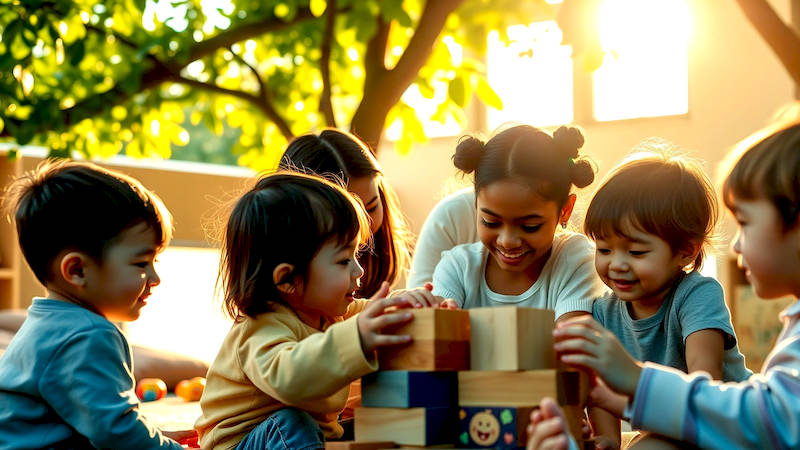
Social skills are the cornerstone of successful interactions, strong relationships, and overall well-being. For children, developing these skills isn't simply about politeness; it’s fundamentally about learning how to navigate the world, understand others, and build a sense of belonging. While some children intuitively grasp these concepts, many benefit immensely from explicit instruction and opportunities to practice in a safe, supportive environment. This is where strategically designed group activities become invaluable tools for parents and educators. This article provides a comprehensive, stepwise approach to fostering social skills in young children through carefully selected and implemented group experiences.
Early childhood is a critical period for social-emotional development. The experiences children have during these formative years lay the groundwork for how they will interact with others throughout their lives. Deficits in social skills can manifest in various ways, from difficulty making friends and sharing to challenges managing conflict and understanding social cues. Intervening early, through positive and proactive methods, can significantly impact a child's social trajectory and overall life success.
This approach doesn’t involve simply throwing children into group settings and hoping for the best. Rather, it’s a deliberate process of scaffolding skills, providing modeling, and gradually increasing complexity. It requires mindful observation, gentle guidance, and an understanding of child development principles. By approaching social skills development with intention and a stepwise methodology, we can empower children to become confident, empathetic, and socially competent individuals.
- Laying the Foundation: Skills Before Groups
- Starting Small: Parallel Play & Guided Interaction
- Introducing Cooperative Play: Shared Goals & Turn-Taking
- Managing Conflict: Mediation & Problem-Solving
- Expanding the Circle: Increasing Group Size & Complexity
- Fostering Empathy & Perspective-Taking
- Conclusion: Cultivating Social Confidence, One Step at a Time
Laying the Foundation: Skills Before Groups
Before diving into group activities, it's crucial to ensure a child possesses certain foundational skills. These aren't inherently "social" in the group context, but are prerequisites for successful interaction. This includes basic emotional literacy – the ability to identify and label emotions in themselves and others. Recognizing cues like facial expressions and body language is paramount. Equally vital is the ability to regulate emotions, even simple ones like frustration or excitement. Children who are overwhelmed by their feelings will struggle to engage constructively with peers.
This preliminary stage also involves focusing on fundamental communication skills. Teaching a child to make eye contact (without it feeling forced or intrusive), use a polite tone of voice, and take turns speaking are all vital building blocks. Simple role-playing exercises can be hugely effective. For example, staging a scenario where a child “asks a friend to play” allows them to practice initiating interaction and responding to different outcomes. Parents can model these behaviors consistently in their own interactions, demonstrating respectful communication. Remember, children learn more from what we do than what we say.
Finally, instilling the concept of personal space – understanding appropriate proximity to others – is essential. Many young children haven’t yet developed an intuitive sense of this boundary. Gentle reminders and demonstrations (“Let’s give Liam some space so he can concentrate on his building”) can help them comprehend the importance of respecting others’ personal boundaries. "According to research from the Yale Center for Emotional Intelligence, explicitly teaching emotional literacy can improve children’s emotional regulation and social skills by up to 20%," highlighting the importance of this initial groundwork.
Starting Small: Parallel Play & Guided Interaction
The initial step in group engagement shouldn’t necessarily be fully interactive play. Parallel play – where children play alongside each other, independently but in proximity – is an excellent starting point. This allows them to become comfortable being in a social environment without the pressure of direct interaction. Provide materials that encourage this type of play, such as building blocks, art supplies, or puzzles. The key is to normalize the presence of others.
Gradually introduce guided interactions. This might involve prompting a child to offer a toy to a peer (“Maybe Sarah would like to build with your blocks”) or suggesting a simple cooperative activity (“Let’s both draw a picture of a rainbow”). Resist the urge to intervene and “fix” things if the interaction isn’t perfect. The goal at this stage isn't flawless social performance, but rather experimentation and exposure. Be prepared for moments of awkwardness or conflict. These are valuable learning opportunities.
Facilitating conversations with open-ended questions can also be helpful. Instead of asking “Did you have fun?”, try “What was your favorite part about playing with the blocks?” This encourages children to elaborate and share their experiences, fostering communication and connection. Remember, the adult role during this stage is to gently guide and support, not to dictate the interaction.
Introducing Cooperative Play: Shared Goals & Turn-Taking
Once children demonstrate comfort with parallel play and guided interaction, the next step is introducing cooperative play – activities that require children to work together towards a shared goal. This is where skills like turn-taking, compromise, and shared decision-making become critical. Construction-based activities like building a tower together, completing a jigsaw puzzle, or creating a collaborative artwork are excellent examples.
These activities naturally necessitate negotiation and collaboration. For example, when building a tower, children must decide who places which block, and how high the tower will be. This presents opportunities to practice communication and compromise. Encourage them to voice their ideas and listen to others ("I want to put the red block on top, but maybe we can put your blue block first?"). Remind them to use "please" and "thank you".
Turn-taking is another fundamental skill practiced during cooperative play. Games with defined turns, like a simple board game or a circle-time activity where each child shares a story, provide structured opportunities for practicing this. It’s important to acknowledge frustration when a child has to wait their turn, validating their feelings (“It’s hard to wait, isn’t it?”) while reinforcing the importance of the rule. Parental modeling continues to be crucial during this stage.
Managing Conflict: Mediation & Problem-Solving
Conflict is inevitably a part of group interaction. Instead of intervening to “solve” the problem for the children, use conflicts as opportunities to teach problem-solving skills. Guide them through a process of identifying the problem ("What happened?"), exploring different solutions ("What could we do to fix it?"), and selecting a solution that’s fair to everyone involved ("Let's try that and see if it works").
Mediation is a key skill for parents and educators in these situations. This involves facilitating a conversation between the children, ensuring that each child has a chance to express their perspective, and helping them find a mutually acceptable resolution. Avoid taking sides or assigning blame. Focus on the behavior, not the child (“Hitting is not okay, but you can tell him you’re upset”).
It’s also valuable to teach children “I” statements. Instead of saying “You made me angry,” they can learn to say, “I feel angry when you take my toy.” This promotes ownership of their feelings and reduces accusatory language. As Dr. Laura Markham, author of Peaceful Parent, Happy Kids, states, “Conflict resolution skills are not innate; they must be taught and practiced.” This highlights the active role parents must play in guiding children through these experiences.
Expanding the Circle: Increasing Group Size & Complexity
As children become more confident and competent in their social skills, gradually increase the size and complexity of the group activities. Start with small groups of 2-3 children and gradually expand to larger groups of 4-5. Introduce activities that require more sophisticated social skills, such as role-playing scenarios (e.g., pretending to be doctors and patients, shopkeepers and customers) or collaborative storytelling.
Introduce activities that require children to navigate different social roles. For example, assign roles within a game (e.g., a leader, a recorder, a materials manager). This helps children understand the importance of different perspectives and responsibilities.
Consider the environment itself. Is it conducive to social interaction? Is the space well-organized and provides opportunities for both individual and group play? Minimizing distractions and providing clear boundaries can help children focus on the social interaction. Remember to observe carefully and adapt the activities to meet the children’s evolving needs and abilities.
Fostering Empathy & Perspective-Taking
Beyond basic interaction skills, nurturing empathy and perspective-taking is crucial for building strong, meaningful relationships. This involves helping children understand and acknowledge the feelings of others. Use books, stories, and real-life scenarios to facilitate discussions about emotions. ("How do you think the character in this story is feeling? Why?"). Encourage children to put themselves in others’ shoes ("Imagine you lost your favorite toy. How would you feel?").
Activities like cooperative games with built-in challenges can also promote empathy. For example, a game where children must work together to rescue a “trapped” stuffed animal encourages them to consider each other’s needs and perspectives.
Lead by example. Demonstrate empathy in your own interactions with others. Children are constantly observing and internalizing the behaviors of the adults around them. By modeling empathy and compassion, we can instill these values in our children. Remember, nurturing empathy is a lifelong process, but early experiences lay a vital foundation.
Conclusion: Cultivating Social Confidence, One Step at a Time
Developing strong social skills is a journey, not a destination. By adopting a stepwise approach – starting with foundational skills, progressing to parallel play, guided interaction, and then cooperative activities – we can create a supportive environment where children can learn, practice, and grow their social competence. The key takeaways are patience, consistency, and mindful observation.
Remember to focus on the process, not just the outcome. Celebrate small victories and provide gentle guidance when challenges arise. Model positive social behaviors yourself, and create opportunities for children to practice their skills in a variety of settings. It is also essential to remember that every child develops at their own pace. Avoid comparing them to their peers, and focus on fostering their individual strengths. By actively nurturing their social-emotional development, we empower them to build strong relationships, navigate the world with confidence, and thrive as well-adjusted individuals. The investment in their social skills today will yield dividends throughout their lives.
Deja una respuesta